What Is Eyelid Malposition?
Eyelid malposition refers to the eyelid sitting or moving abnormally, most commonly as ectropion or entropion. Ectropion occurs when the lower eyelid turns outward, away from the eye, exposing the inner surface and often causing excessive tearing. Entropion is the opposite: the eyelid, usually the lower lid, turns inward, causing lashes and skin to rub against the eye's surface.
Both conditions can develop gradually due to age-related tissue laxity or result from scarring, nerve issues, prior surgery, or trauma. While they may seem like minor cosmetic issues at first, both interfere with the eyelid's basic job, protecting and lubricating the eye.
Signs You May Have Eyelid Malposition
Eyelid malposition often develops slowly, so patients frequently attribute early symptoms to dry eye or allergies before recognizing the underlying cause. Watch for:
- Chronic tearing or watery eyes
- Redness, irritation, or a gritty, sandy feeling
- Visible outward or inward turning of the eyelid
- Lashes that appear to rub against the eye
- Sensitivity to light or wind
- Crusting or discharge along the lash line
If any of these symptoms persist, an evaluation with an oculofacial specialist can determine whether the malposition is the cause and how advanced it has become.
Why Eyelid Malposition Needs Specialized Care
Untreated eyelid malposition puts the cornea at risk, not just the eyelid's appearance. When the lid can't close fully or lashes continually rub against the eye's surface, the cornea is left exposed and vulnerable to dryness, abrasion, and infection. Left unaddressed, this can progress to corneal scarring and vision loss in severe cases.
This is why eyelid malposition is best managed by someone qualified to evaluate the eye itself, not only the surrounding skin and muscle. A specialist who understands ocular surface health, tear film function, and corneal anatomy can catch complications that a purely cosmetic evaluation might miss.
Learn more about eyelid malposition and the specialized treatment options available.
What Makes an Oculofacial Specialist Different From a General Plastic Surgeon?
An oculofacial specialist, also called an oculoplastic surgeon, completes both an ophthalmology residency and an additional plastic surgery fellowship focused specifically on the eyelids, orbit, and surrounding structures. This training path is distinct from general plastic surgery, which does not include the same depth of ophthalmic education.
Membership in the American Society of Ophthalmic Plastic and Reconstructive Surgery (ASOPRS) reflects this specialized training. Dr. Carniciu is a member of ASOPRS, board-certified and one of a select group of surgeons worldwide to hold this credential, considered the gold standard for oculoplastic expertise. This distinction matters for a structure as delicate and functionally important as the eyelid, where a millimeter of difference can affect both appearance and vision.
Learn more about eyelid surgery and the specialized care available at New York Eye and Face Oculoplastic Surgery.
How Dr. Anaïs Carniciu Treats Eyelid Malposition in Westchester, NY
Dr. Carniciu brings a rare combination of ophthalmic and surgical training to eyelid malposition repair. Her path included an ophthalmology residency at Case Western Reserve University, where she served as Chief Resident, followed by a two-year ASOPRS-sponsored oculofacial plastic surgery fellowship at the University of Michigan. She currently serves on the oculoplastics faculty at the New York Eye and Ear Infirmary of Mount Sinai, in addition to leading New York Eye and Face Oculoplastic Surgery in West Harrison.
At her Westchester practice, Dr. Carniciu evaluates each case of ectropion or entropion individually, since the degree of tissue laxity, scarring, or muscle involvement varies from patient to patient. This personalized approach lets her tailor the correction to what's actually causing the malposition, rather than applying a one-size-fits-all technique.
Learn more about Dr. Anaïs Carniciu and her specialized oculofacial training.
What to Expect: Consultation, Procedure, and Recovery
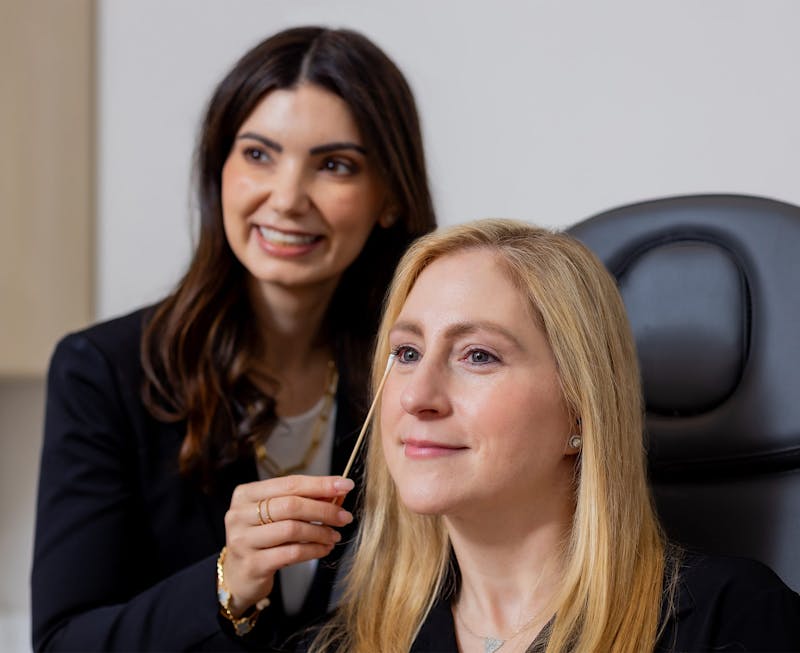
Treatment for eyelid malposition begins with a comprehensive consultation to assess the eyelid's structure, tone, and function, along with any corneal irritation already present. Dr. Carniciu examines the underlying cause before recommending a treatment path.
- Consultation: A detailed eye and eyelid exam determines whether the malposition is due to laxity, scarring, muscle weakness, or another factor.
- Procedure: Depending on severity, correction may involve tightening lax eyelid tissue, releasing scar tissue, or grafting skin, performed as an outpatient procedure.
- Recovery: Most patients experience swelling and bruising for one to two weeks, with symptom relief often noticeable well before full healing is complete.
Because every case differs, recovery timelines and exact techniques are discussed in detail during the consultation.
Concerned About Eyelid Malposition? Dr. Carniciu Can Help
Eyelid malposition affects both comfort and eye health, and it deserves care from someone trained to address both. Dr. Anaïs Carniciu's ASOPRS certification and dual training in ophthalmology and oculoplastic surgery make her well-suited to evaluate and treat ectropion and entropion at New York Eye and Face Oculoplastic Surgery in West Harrison, NY. If you're noticing tearing, irritation, or visible changes to your eyelid, schedule a consultation to find out what's causing it and what your treatment options look like.