Undergoing Blepharoplasty Surgery

Heavy, puffy, or droopy upper eyelids can make you look tired and older than you feel. If you wish to correct these problems, esteemed oculofacial plastic surgeon Dr. Anaïs Carniciu, MD, can help by performing an eyelid lift, also known as blepharoplasty. At her immaculate, state-of-the-art office suite, Dr. Carniciu delivers customized blepharoplasty results using a minimally invasive approach. She is dedicated to providing patients with natural-looking, elegant results that reflect their innate beauty and vitality.

I cannot begin to say enough wonderful things about Dr. Carniciu. I had such a wonderful experience, as her knowledge creates the upmost comfortable environment for new patients. I’d recommend them 100x over, NY Eye & Face is nothing short of amazing! 5 stars all around!

J.S.

The Blepharoplasty (Eyelid Surgery) Procedure

New York Eye and Face logo
woman with eyes closed

What Are the Benefits of Upper Blepharoplasty?

Reduced puffiness, sagging, and heaviness in the upper lids

  • A more relaxed, inviting appearance
  • A boost in self-confidence
  • Inconspicuous scarring
  • Natural-looking outcome
  • Improved field of vision

What is Upper Blepharoplasty?

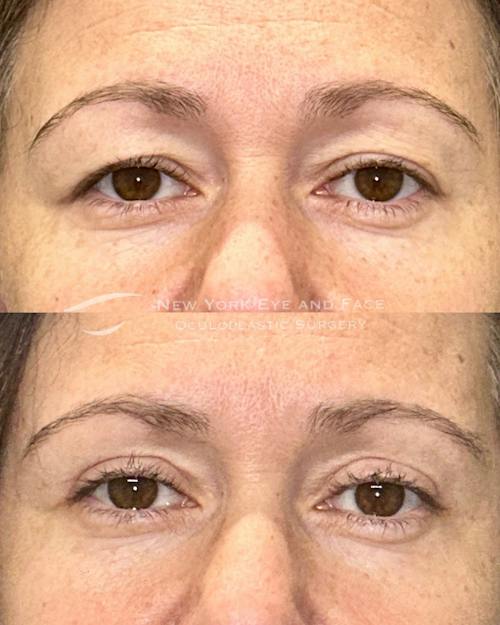
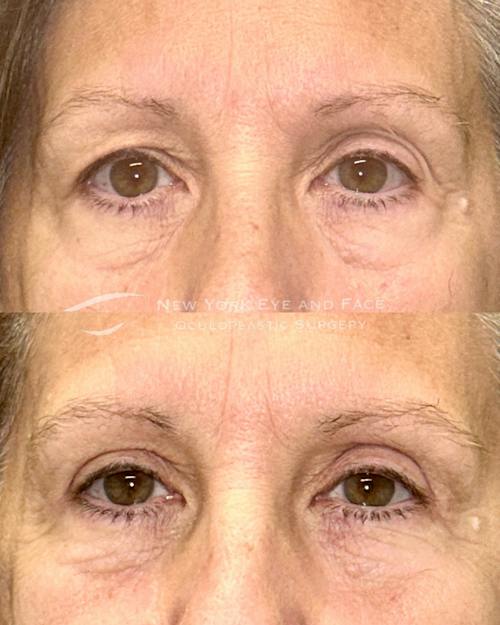
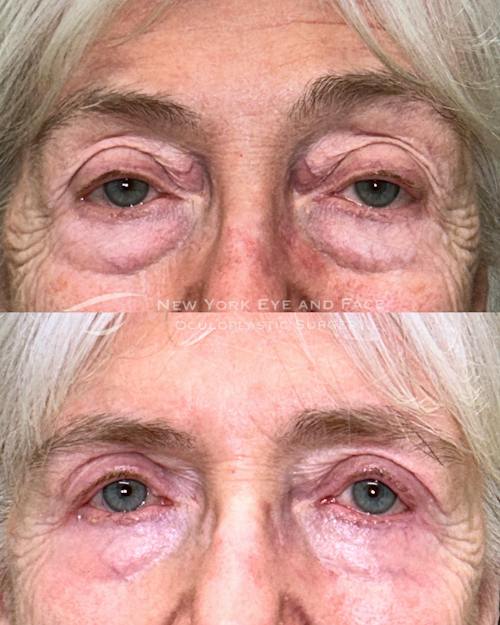
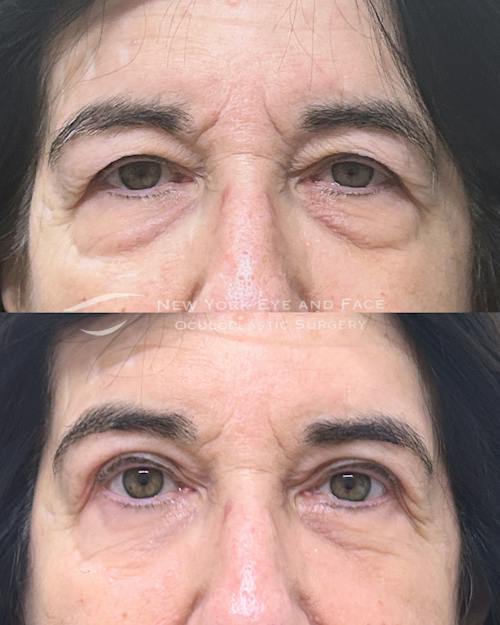
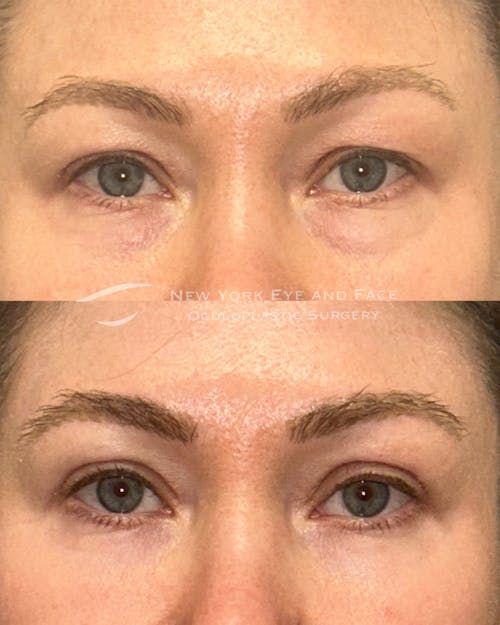
Blepharoplasty, also known as eyelid lift surgery, removes excess skin, fat, and tissue from around your eyes to refresh and rejuvenate your appearance. Upper blepharoplasty can reduce the heaviness and puffiness of your upper eyelids, correcting a condition known as “dermatochalasis.” In some cases, the surgery can even improve your field of vision. Our expert surgeon at New York Eye & Face has undergone extensive foundational training in ophthalmic surgery to complement her expertise in plastic surgery. Dr. Carniciu has years of experience performing blepharoplasty and other cosmetic surgical procedures. Blepharoplasty is performed as an outpatient procedure, and patients can expect to go home the same day. The surgery requires an injection of a local anesthetic to the surgical site with or without IV (intravenous) sedation.

Upper Blepharoplasty Before & After Photos

View Upper Blepharoplasty Gallery

What Happens During Upper Eyelid Surgery?

This procedure can be performed in an outpatient (non-hospital) setting under light anesthesia consisting of local medication injected at the surgical site and/or IV sedation. Patients are able to go home on the same day of the procedure. The surgery itself takes approximately half an hour on average and involves removing a small flap of skin and underlying tissue along the upper eyelid crease. The incision is hidden in the natural eyelid crease to avoid the appearance of any post-operative scarring. Dr. Carniciu plans skin removal meticulously to achieve the desired degree of rejuvenation and ensure your eyelids close and function properly after your blepharoplasty procedure.

Background media

Why Choose an Eyelid Specialist for Upper Blepharoplasty

Selecting the right surgeon for upper eyelid surgery is crucial for ensuring both safety and aesthetic results. Dr. Anaïs Carniciu is one of fewer than 750 surgeons worldwide certified by the American Society of Ophthalmic Plastic and Reconstructive Surgery (ASOPRS), which is recognized as the gold standard in eyelid surgery training. 

In contrast to general plastic surgeons who may only perform a limited number of eyelid surgeries during their residency, ASOPRS fellowship-trained surgeons like Dr. Carniciu complete thousands of blepharoplasties and pass two sets of rigorous board examinations. This extensive experience enables Dr. Carniciu to provide precise, natural-looking results that enhance the eyes and restore confidence while protecting the delicate anatomy that safeguards your vision.

What Will My Recovery Entail?

Bruising and swelling are typical after eyelid surgery; however, these symptoms peak in the first postoperative week. We recommend remaining home to recover for approximately 7-10 days. Thereafter, most patients can comfortably return to work. During the recovery period, heavy exertion and makeup use should be avoided. Dr. Carniciu will provide a detailed aftercare plan and assignments for follow-up sessions to ensure your upper blepharoplasty recovery is seamless and stress-free.

flax plant in pot

Upper Eyelid Blepharoplasty Procedure & Candidates

New York Eye and Face logo

Upper Eyelid Blepharoplasty FAQs

How can I tell if I need a blepharoplasty, a brow lift, or ptosis repair?

All three can make the upper eyelids look heavy, but each has a different cause. Blepharoplasty treats excess skin and fat. A brow lift treats brows that have descended and push skin down onto the lid. Ptosis repair treats a lid margin that sits too low because the lifting muscle has weakened. Many patients have more than one of these. Dr. Carniciu measures each one at your consultation so the procedure matches the cause.

Will upper eyelid surgery change the shape of my eyes?

When the procedure is planned conservatively, it shouldn't. The goal is to remove the excess that hides your natural eyelid shape, not to create a new one. Removing too much skin is what produces a hollow, startled, or "operated" look. Dr. Carniciu measures how much skin to remove so your lids still close comfortably and still look like your own.

Can I have upper blepharoplasty if I have dry eye?

Often, yes, but dry eye should be evaluated and treated before surgery. Eyelid surgery can temporarily worsen dryness while the lids heal. Patients with significant dry eye may need a more conservative plan. Because Dr. Carniciu developed the BBL Dry Eye Protocol, she can treat underlying meibomian gland dysfunction before or after surgery to help keep your eyes comfortable.

How long do upper blepharoplasty results last?

The results are long-lasting, because skin and fat that have been removed don't grow back. Your face will keep aging naturally, though. Years later, some patients notice new skin laxity or lower brows. Wearing sun protection, not smoking, and keeping up a good skincare routine all help preserve your results. If the upper lids become heavy again later, the cause is often the brow rather than the eyelid.

When will my eyelid scar fade?

The incision sits in the natural upper eyelid crease, so it is hidden when your eyes are open. It usually looks pink for several weeks and then fades gradually over the following months. Eyelid skin is among the thinnest on the body and tends to heal very well. Dr. Carniciu will tell you when you can start scar care and makeup.

Is upper blepharoplasty different for men?

Yes. Men generally have a lower, flatter crease and heavier brows, and an overly high or sculpted crease can look feminine on a man. Dr. Carniciu adjusts where she places the crease and how much tissue she removes so the result stays masculine. Learn more on our male blepharoplasty page.

Contact us media
Accessibility: If you are vision-impaired or have some other impairment covered by the Americans with Disabilities Act or a similar law, and you wish to discuss potential accommodations related to using this website, please contact our Accessibility Manager at 914-339-6050.
Contact Us