
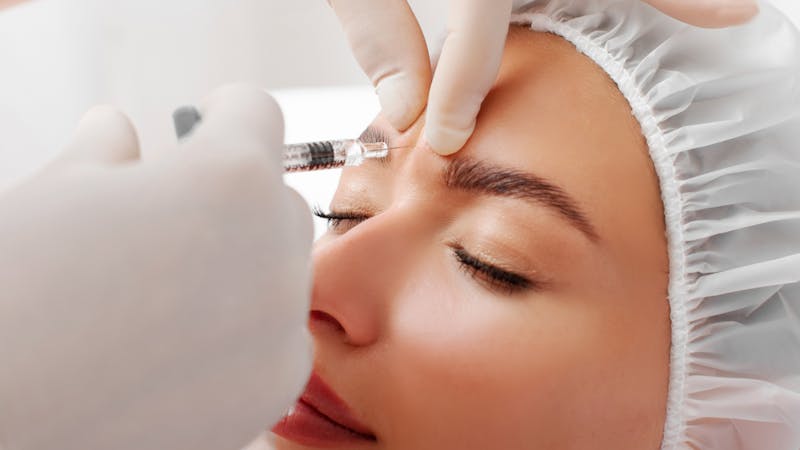
A subtle difference in eyelid height, brow position, or eye openness can change how alert, rested, or confident someone appears. Patients often notice it most in photos or during animation, when one eye seems heavier or less expressive than the other.
New York Eye & Face views BOTOX for eye asymmetry through the lens of oculofacial specialization. Dr. Anaïs Carniciu is a board-certified, ASOPRS-certified oculofacial plastic surgeon, part of a highly select group of approximately 750 surgeons worldwide with advanced fellowship training dedicated exclusively to the eyelids, orbits, and face.
Because eye asymmetry may stem from muscle dominance, eyelid position, brow support, or subtle compensatory patterns, determining whether BOTOX is appropriate or whether another approach is needed requires expert evaluation first. In this article, we explore when BOTOX can help correct eye asymmetry, when it cannot, and why treatment around the eyes should always be guided by specialized oculofacial judgment.
When BOTOX Can Improve Eye Asymmetry
BOTOX can be effective when asymmetry is primarily caused by muscle imbalance. An example of this would be when one brow elevates more strongly or one side of the upper face pulls more aggressively during expression.
In these cases, selective neuromodulation can:
- Reduce the dominant muscle pull on one side
- Improve symmetry during animation
- Create a more balanced resting expression
Botulinum toxin works by temporarily reducing neuromuscular activity, making it useful for dynamic imbalances rather than structural ones.
When BOTOX Is Not the Right Tool
Structural issues rather than muscular imbalances cause many cases of eye asymmetry. In these situations, BOTOX cannot correct the underlying problem and may even accentuate imbalance.
BOTOX is unlikely to resolve asymmetry caused by:
- True upper eyelid ptosis
- Excess eyelid skin or significant hooding
- Prominent lower eyelid fat or lid laxity
- Skeletal or ligamentous differences
In such cases, alternative or complementary options may be more appropriate, including:
- Dermal fillers to restore volume or contour support
- Eyelid surgery to correct skin, fat, or lid position
- Ptosis repair when eyelid droop is functional or progressive
- Combination planning for multifactorial asymmetry
Why Eye Asymmetry Requires an Oculofacial Specialist, Not Just an Injector
Treating eye asymmetry with BOTOX is fundamentally different from treating forehead lines or crow’s feet. Here’s why:
Eye asymmetry is often an eyelid problem, not a wrinkle problem
- What appears to be asymmetry may stem from subtle differences in eyelid height, brow support, or compensatory muscle use rather than surface-level muscle overactivity.
- Conditions such as early or compensated ptosis can masquerade as simple asymmetry, and weakening the wrong muscle can worsen the imbalance
The periocular region tolerates far less margin for error
- Minor dosing variations around the eyes can have outsized effects
- Over-relaxation of specific muscles may alter brow position, eyelid opening, or blink dynamics, leading to heaviness, droop, or visual fatigue
Pre-existing asymmetry increases complication risk
- Patients seeking correction of eye asymmetry often already have baseline differences in eyelid tone, muscle strength, or lid position
- These patients are more susceptible to unintended outcomes such as worsening imbalance or eyelid ptosis, an adverse effect recognized explicitly in FDA labeling for botulinum toxin products
Eye comfort and function must be preserved
- The muscles around the eyes play a role not only in expression, but in blink mechanics and tear distribution
- Altering these dynamics can exacerbate dry eye symptoms or ocular surface irritation, particularly in patients with underlying dryness or eyelid laxity
Treating Eye Asymmetry With Care, Context, and Precision
Eye asymmetry is a clinical nuance that requires careful assessment and disciplined treatment planning. At New York Eye & Face, Dr. Anaïs Carniciu’s decisions regarding BOTOX for eyelid asymmetry is informed by her daily experience in treating eyelid conditions. This perspective helps her determine when and how to use neuromodulators, always considering eyelid mechanics, blink dynamics, and long-term balance.
Dr. Carniciu's expertise encompasses both aesthetic enhancement and the management of complex eyelid conditions. This allows her to evaluate asymmetry in context rather than in isolation. Such depth of experience is crucial, as subtle differences in eye openness or expression may indicate underlying changes in eyelid position that BOTOX alone cannot address.
If you are considering BOTOX for eye asymmetry, or if previous treatments have not provided the balance you expected, we invite you to schedule a private consultation with Dr. Carniciu. Together, we will identify the root cause of the asymmetry and create a thoughtful treatment plan that may include BOTOX, alternative treatments, or a tailored combination.